
OpenAI keeps getting sued, surgeons are now remote workers, and we (likely) won't cook our oceans after all
I'm sharing scitech news I find interesting, crazy, and fun

Surgeons are now remote workers
Imagine this job ad:
“We’re looking for a heart surgeon capable of performing complex operations on dying patients. We’re offering a competitive salary and the option of remote work.”
Sounds crazy, right?
Well… not necessarily.
Here’s an excerpt from a recent article on the "world’s first transatlantic thrombectomy” (a removal of a blood clot):
“Using a cutting-edge robot developed by Lithuanian MedTech company Sentante, Professor Grunwald proved that a blood clot could be removed from the brain without a specialist being physically present when she performed the procedure from a remote site within the School of Medicine at Ninewells Hospital.”
You can read the full article here: World’s first transatlantic thrombectomy heralds new era of stroke treatment
Obviously, I don’t think we’ll ever see doctors performing entire surgeries remotely, all by themselves, as too many things could go wrong (I’m looking at you, Cloudflare).
However, I do see doctors from the one continent assisting their peers on another with risky procedures when time is of the essence, and an 8-hour flight could make a difference between life and death.
This is simply awesome news.
The Jetsons are here, we just didn’t get the memo
After Elon Musk’s Optimus robots, those crazy robot-dogs Boston Dynamics is building, and even real-life TARS I wrote about last week, let me introduce you to - Eggie.
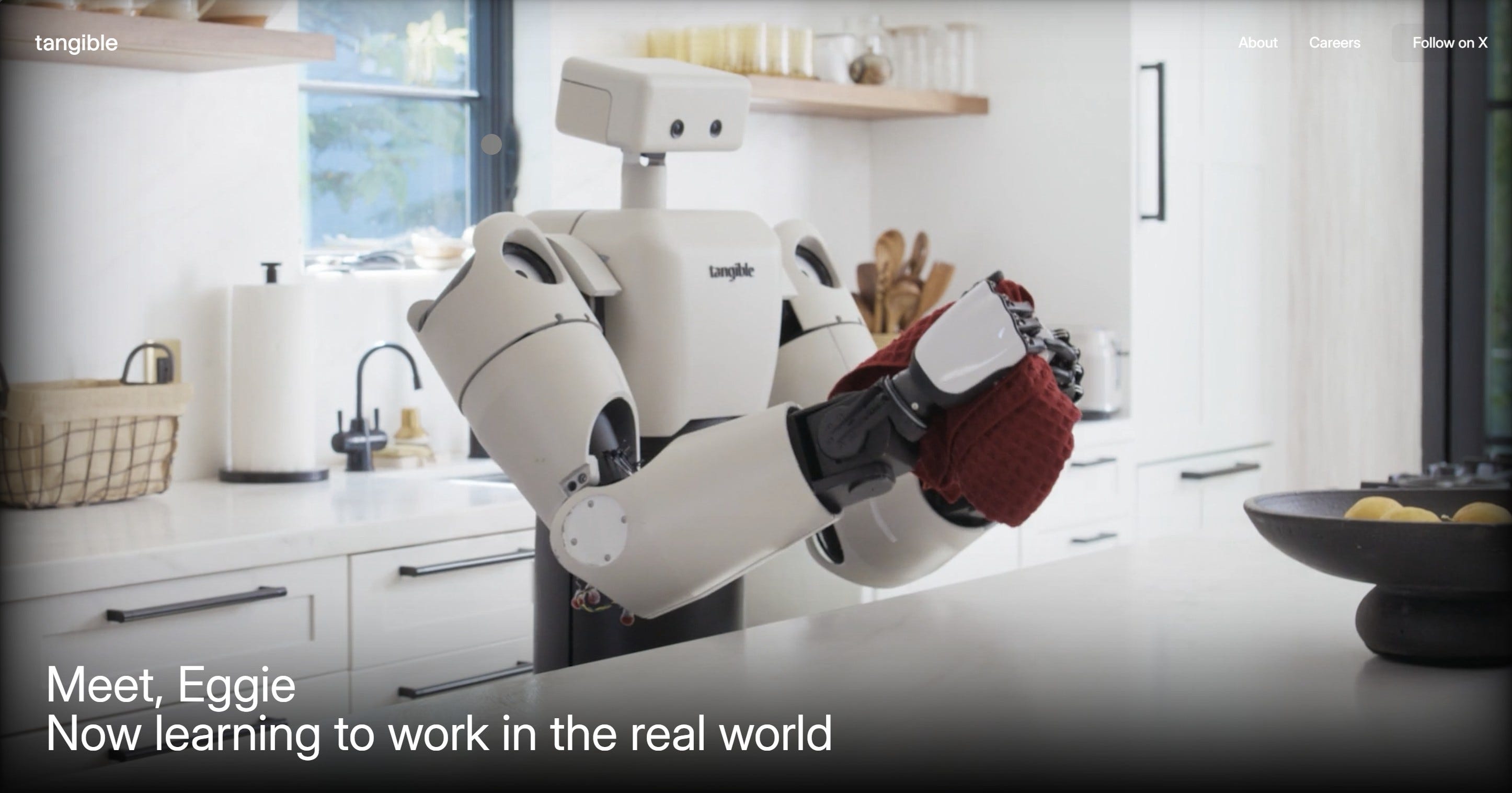
The pic itself is so obviously AI, but allegedly the company has the base done already and the robot can drive around the house. It’s still missing arms, though.
Eggie is being designed to help with chores around the house. Hey, a dish washer with hands!
Check it out here.
But Eggie isn’t the only robot competing for our kitchen real estate. There’s also Sourccey, and looking at the pics, I can say someone’s been watching a little too much Star Wars.
Look at this R2D2 wannabe:
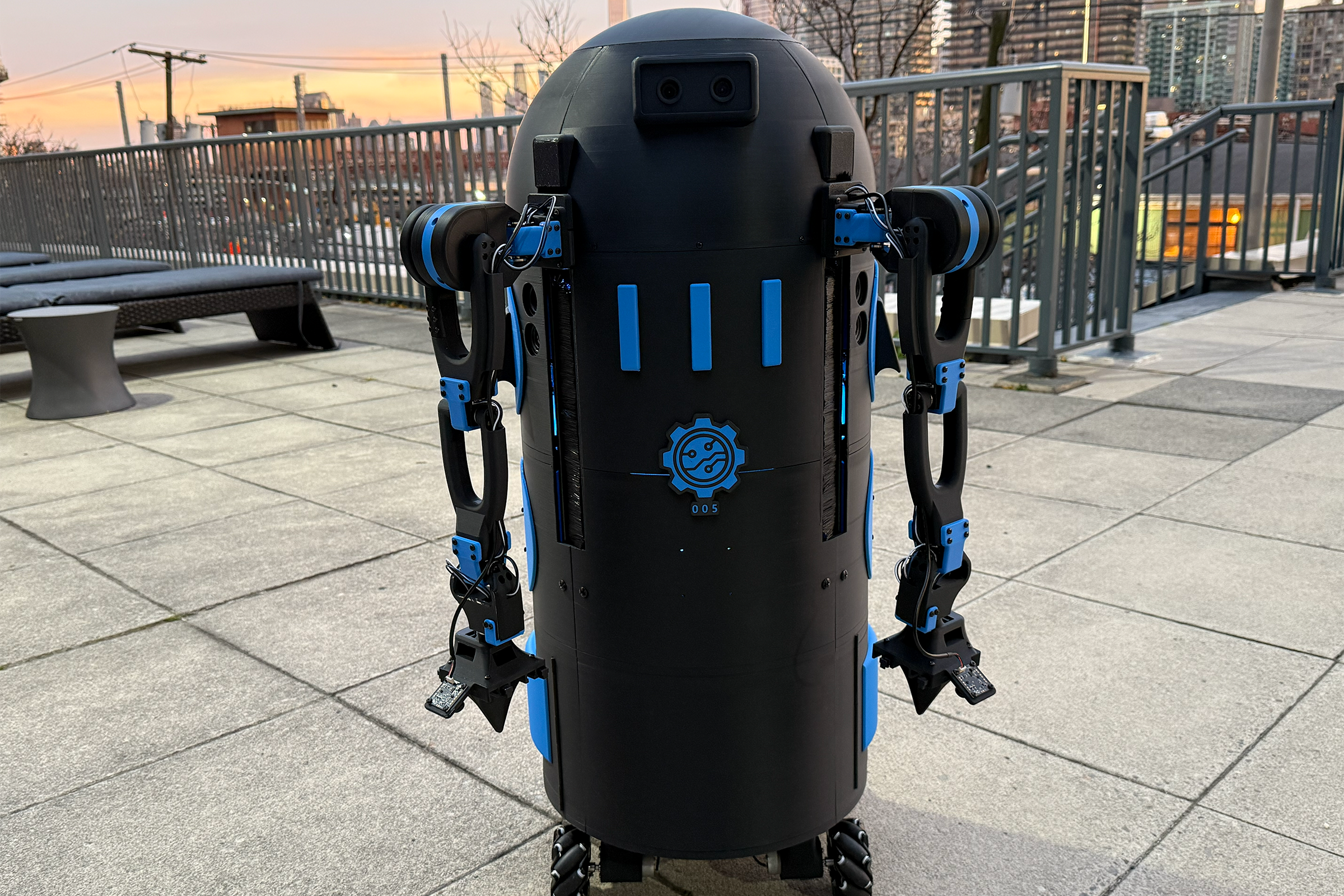
The robot’s brain is supposed to be open source which could be great. You can see more pics and a few clips here.
We can pull excess carbon from the ocean
When human-generated CO2 makes it into the oceans, it forms carbonic acid, which lowers the ocean’s pH.
It’s basically killing everything in the water.
It’s also one of the bigger issues with global warming, but it seems the Chinese found a solution.
Scientists from two universities built an ocean carbon recycling system that captures the CO2 directly from the seawater and turns it into - an ingredient for biodegradable plastic.
Scientists turn ocean CO2 into bioplastic in world-first system
When your bed tries to kill you
I remembered this little gem after the recent Cloudflare outage and figured I might share it here as an example of why you really shouldn’t have ‘smart’ everything.
Roughly a month ago, another key pillar of modern internet - AWS - dropped dead and pulled with it more than half of the virtual planet. You couldn’t pay for stuff online, you couldn’t chat, and you couldn’t work.
But people with a $5,000 mattress from Eight Sleep had it worst.
For those of you who are unfamiliar with Eight Sleep, it’s a company that makes smart mattrasses. Yes, I know.
Long story short - when AWS died, the mattrasses went psycho. They started overheating, were stuck in a completely uncomfortable position, and were flashing lights across, presumably, pitch black bedrooms.
Obviously, it’s not a straight up assassination attempt (please don’t sue me) but the mishap did trigger an apology from the CEO.
You can read this entire glorious fuckup on this link:
Smart Beds Turned Into Sleep Torture Chambers When AWS Crashed
OpenAI keeps getting sued (and why it doesn’t really care)
I wrote about this in Notes a few days ago and figured it could use a little more elaboration. Here’s the thing - OpenAI is being sued left and right, by media publications, for copyright infringement.
The New York Times filed its suit on December 7, 2023.
A group of independent digital outlets, including The Intercept, Raw Story, and AlterNet, filed theirs on February 28, 2024.
A separate group, owned by Alden Global Capital (New York Daily News, Chicago Tribune, Orlando Sentinel, South Florida Sun-Sentinel, San Jose Mercury News, Denver Post, Orange County Register, and St. Paul Pioneer Press) sued OpenAI in April 2024.
There is a team-up of major Canadian news organizations that jumped on the bandwagon in late November 2024 as well - Toronto Star, CBC/Radio Canada, The Globe and Mail, Postmedia, Metroland, Canadian Press
Ziff Davis, the owner of CNET, PCMag, ZDNet, IGN, Lifehacker, and a bunch of other tech-related publications, filed his suit against OpenAI in April 2025.
That’s at least two dozen, and they’re all saying the same thing - OpenAI is using their content to train AI models without permission. The company must either stop it, pay for the data, or share the revenue.
It makes sense. Without quality data (the one created by journalists and other people of flesh and blood), the AI would suck, and no one would use it.
A drop in the (AI) bucket
But AI is getting better, and OpenAI is literally about to become a money printer.
Heck, Sam Altman himself said on X, “we expect to end this year above $20 billion in annualized revenue run rate and grow to hundreds of billion by 2030.”

That means OpenAI is already earning money at a mega-corporation scale (~20 billion/year) and expects to become one of the highest-grossing companies in the world by 2030.
Read that again.
It’s going to be one of the highest-grossing company ON THE ENTIRE PLANET in five years.
Here’s the kicker:
One thing I learned about American businesses (as opposed to European businesses) is that they will break every law possible if they need to. They don’t care.
Win first, worry about the consequences later.
I’ve seen it countless times with crypto startups - businesses operating in the grey zone (or outright being non-compliant) and then figuring it out with the SEC later, even paying the fines if need be.
This doesn’t mean OpenAI will simply admit foul play. They’ll still fight to minimize the damage, but IMO they’re already clenching their jaws and bracing for the hit.
It could be good news for the media industry, but it’s a battle won in an otherwise losing war (I’ll talk about that some other time).
In the meantime, here’s a little light reading, if you’re interested:
Leaked documents shed light into how much OpenAI pays Microsoft
Sam Altman says OpenAI has $20B ARR and about $1.4 trillion in data center commitments